
Planning my own wedding music felt like a massive puzzle. I knew I wanted that elegant, timeless vibe. That is how I ended up down the rabbit hole of live strings. If you want a classic feel, hiring a group is a stellar choice. But after sitting through dozens of ceremonies and chatting with musicians, I learned a lot. It is not all just perfect movie moments.
Here is my real, unfiltered take on what works, what fails, and how to get the most out of your live musicians.
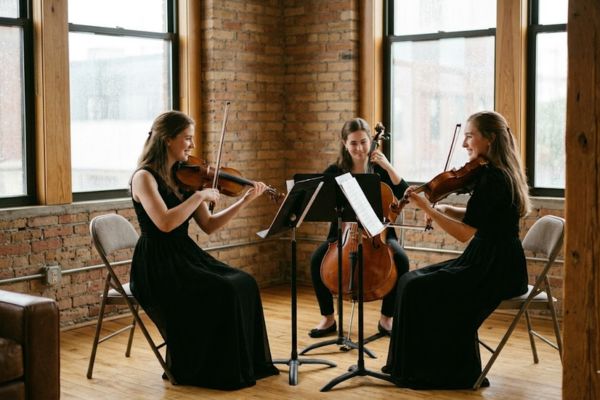
A standard quartet brings four instruments to the mix. You get two violins, one viola, and one cello. Together, they create a rich, full sound. It is basically a mini orchestra that can fit into a tight corner.
The biggest perk is the emotional impact. When a violin swells as the doors open, people cry. It is a sensory experience that pre-recorded tracks cannot match. You can feel the vibration of the strings in the room.
But let us be real about the limits too. Strings are acoustic. They do not come with big volume knobs. If you are throwing a massive outdoor bash next to a noisy highway, the sound can get lost in the wind.
Here is a quick breakdown of how a quartet fits different parts of the day:
|
Wedding Event |
How It Works |
My Honest Rating |
|
The Ceremony |
Perfect for processional and recessional walks. |
5 out of 5 stars |
|
Cocktail Hour |
Great background buzz while guests mingle. |
4 out of 5 stars |
|
The Reception |
Fun for dinner, but lacks the bass for wild dancing. |
2 out of 5 stars |
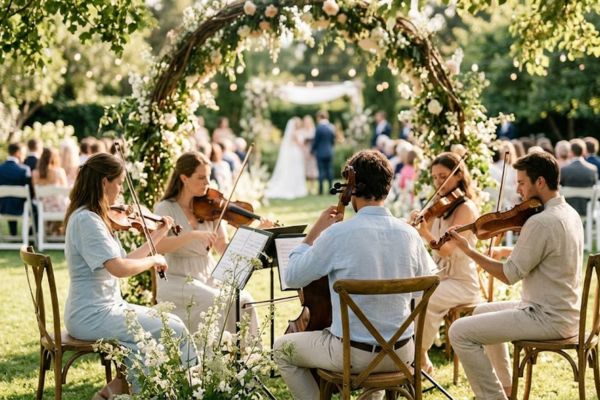
The ceremony is where string quartet wedding music truly shines. This is where you build the narrative of your day. Most couples break the music down into three distinct blocks.
First is the prelude. This plays while your guests find their seats. It sets the tone. Next is the processional, which accompanies the wedding party and the grand entrance. Finally, the recessional plays right after the first kiss as you walk back up the aisle.
For my prelude, I wanted a calm, welcoming vibe. I asked for light classical tracks. It kept the early guests quiet and expectant.
When it comes to the big entrance, you have two paths. You can go traditional or modern.
The Traditional Route: Think of the classic bridal chorus. It is stately and grand.
The Modern Twist: You can choose pop covers. Hearing a Taylor Swift song played on a cello is incredibly cool. It adds a fun, personal touch that makes guests smile.
Let us talk about money. Hiring live musicians is an investment. Prices vary wildly depending on your location and the date. A Saturday in June will always cost more than a Friday in November.
Most groups charge by the hour. A standard booking is usually two or three hours. This covers the prelude, the ceremony, and the cocktail hour.
Beyond the fee, you need to think about logistics. Musicians need basic comfort to play well.
Important Note: String instruments are made of wood and held together by delicate glue. They hate extreme heat, direct sunlight, and moisture.
If you are planning an outdoor July wedding in a sunny park, you must provide shade. A tent or a large umbrella is a must. If it starts to rain, even a little bit, they will have to pack up to save their gear. Always have a solid backup plan for bad weather.
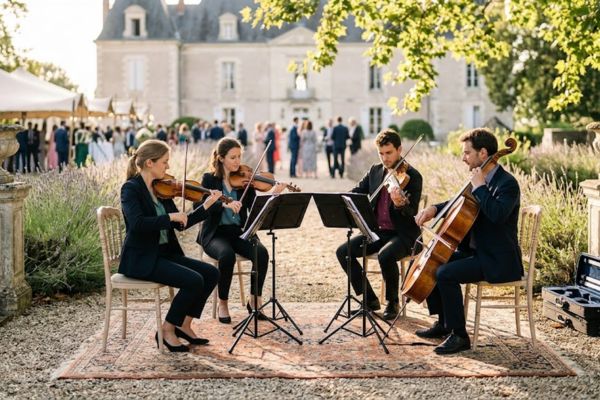
Space is another factor. Four musicians need room to bow without hitting each other. They also need four sturdy chairs without arms. Armrests block their elbows from moving freely.
Getting your playlist right takes some thought. You want a mix that keeps everyone happy. Grandma will love the classical gems, while your friends will perk up at the movie themes.
Most professional quartets have a huge library of sheet music. They can hand you a list of hundreds of songs they already know.
Here is a look at the most popular tracks that couples request:
|
Genre |
Song Title |
Best Used For |
|
Classical |
Canon in D |
Bridal Entrance |
|
Pop Cover |
Marry You |
Recessional Walk |
|
Movie Theme |
Concerning Hobbits |
Prelude Music |
If you want a specific song that is not on their list, ask early. They might need to buy the sheet music or write a custom arrangement. This can sometimes add an extra fee to your bill, so keep that in mind.
Communication is the key to a stress-free day. Do not leave the details until the last week.
First, sync the musicians with your wedding planner or coordinator. The quartet needs to know the exact cues for when to start and stop playing. They watch the coordinator for a nod or a hand signal to fade out a song smoothly.
Second, think about amplification if your guest count is over one hundred people. A large crowd makes a lot of ambient noise just by breathing and shifting in their seats. Ask the group if they can plug into a small sound system if needed.
Lastly, trust their expertise. If they tell you a certain song does not sound great on strings, take their advice. They know how to make their instruments sound best in different spaces.
Prices usually range from $600 to $1,500. The total cost depends on your wedding date, guest count, and how many hours you book them to play.
Yes, they can. Most groups have a huge list of modern hits. They love to play pop covers, rock tracks, and movie themes to surprise your wedding guests.
They need four armless chairs and a flat space. They also need full shade from the sun and shelter from rain to protect their wood instruments from harm.
They play for about thirty minutes as guests sit down. Then they play for your walks down the aisle and a few short songs as the crowd leaves.
Small weddings do not need a microphone. If you have over one hundred guests, you may need a small sound system so everyone can hear the music clearly.